
When Tools Begin to Decide
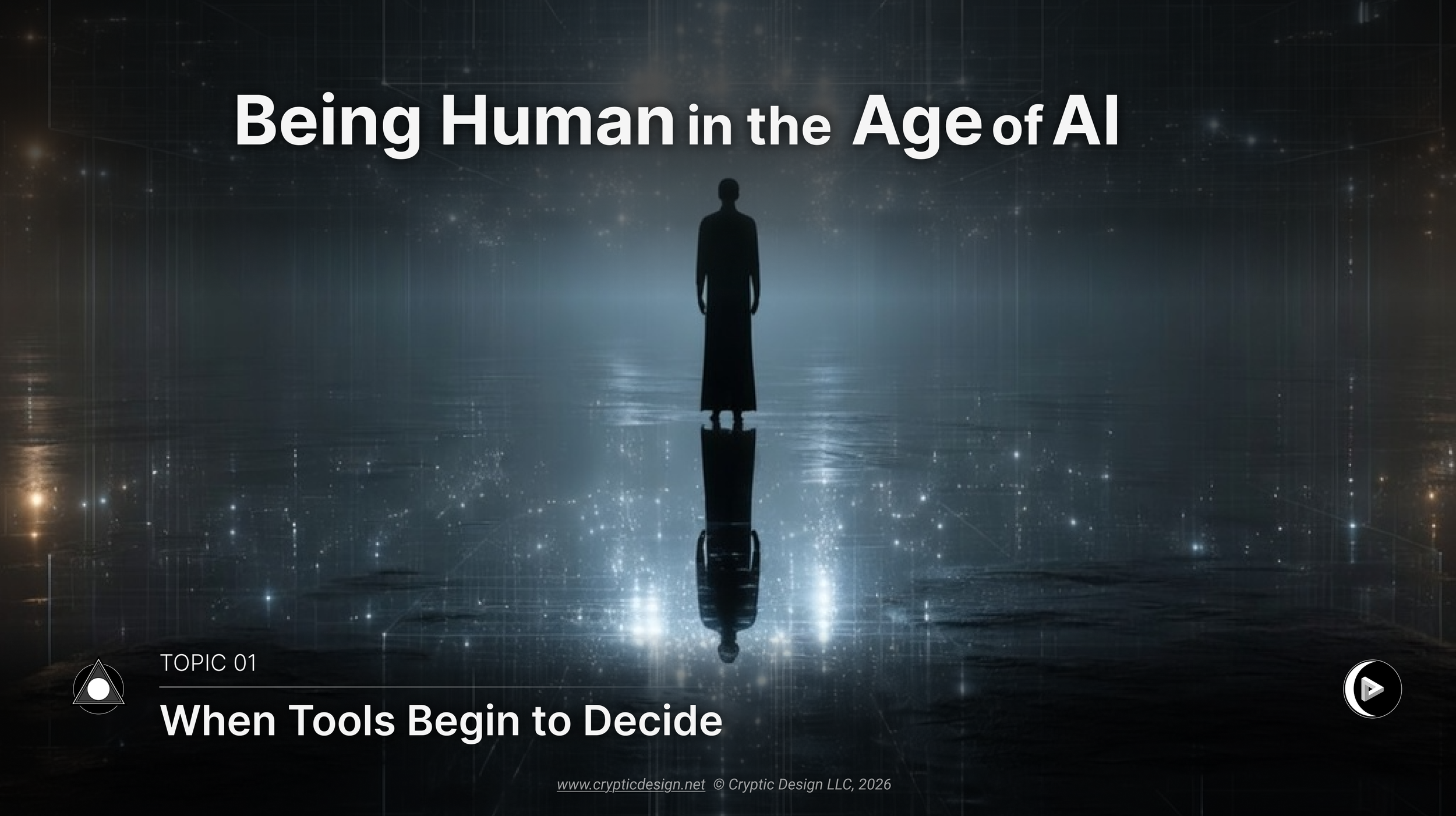
Image Title
When Tools Begin to Decide
Image Description
A human silhouette framed by a reflective digital space, representing the tension between human agency and machine-driven decision systems.
Purpose
This article explores how modern tools—particularly algorithmic and AI-driven systems—reshape human decision-making. Its purpose is to examine where agency shifts, how responsibility becomes diffuse, and what designers implicitly encode when tools begin to decide for us.
Summary
As technology evolves from assistive tools to decision-making systems, the human role changes from actor to overseer. This article examines that transition through the lens of design intent, agency, and responsibility.
Back to TopSystem / Concept Overview
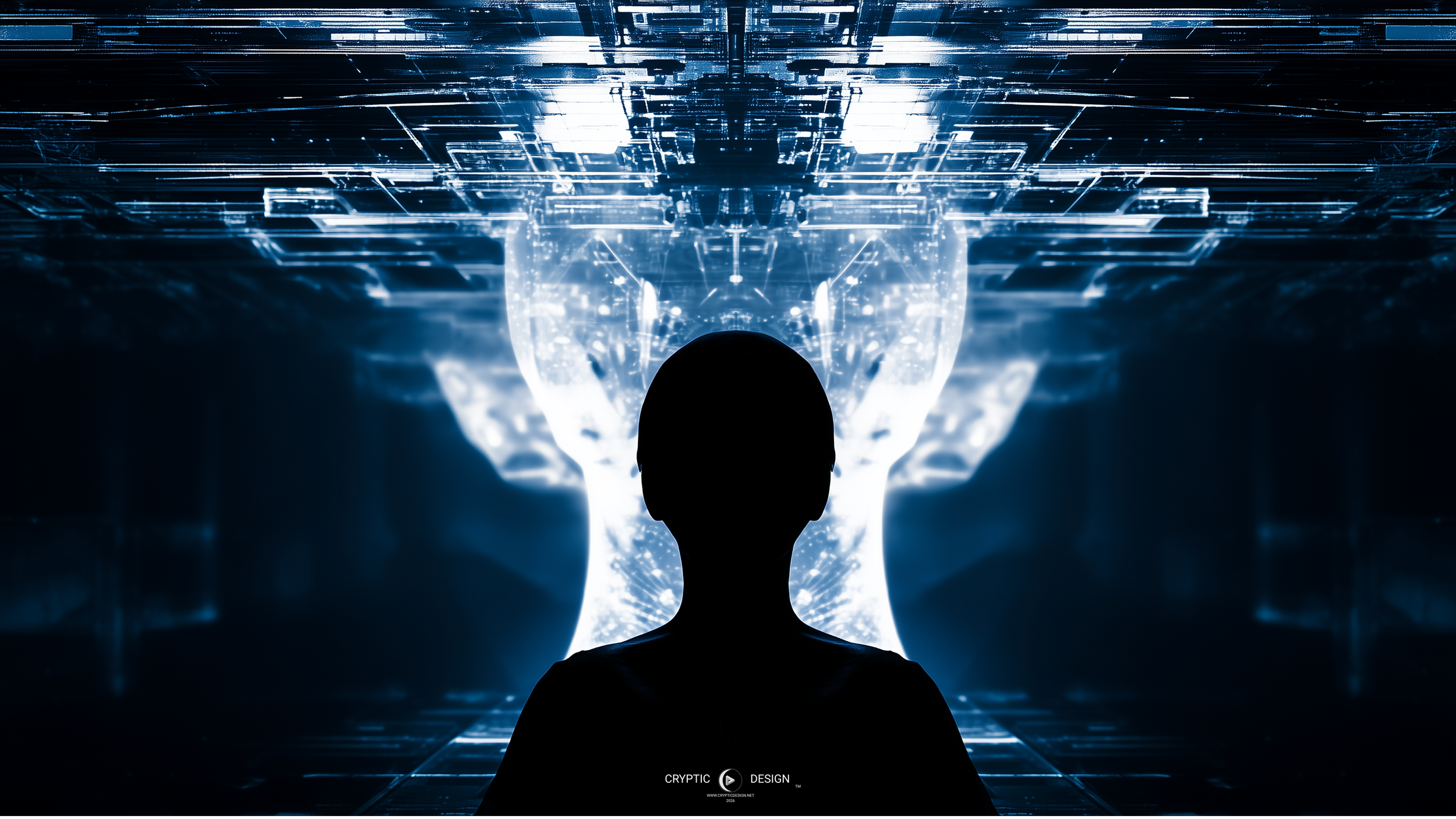
Image Title
Human Agency
Image Description
A solitary human figure positioned within a vast digital structure, illustrating how personal agency becomes less visible as systems increasingly guide decisions.
Agency
Who ultimately holds decision-making power when systems recommend, optimize, or automate outcomes. Agency becomes less visible as tools assume greater control.

Image Title
Automation Bias
Image Description
A human hand interacting with a glowing digital interface, representing the tendency to defer judgment to automated systems.
Automation Bias
The tendency to trust system output over human judgment, especially when decisions are presented as objective or optimized.

Image Title
Design Intent
Image Description
Layered digital frameworks forming invisible pathways, illustrating how values and assumptions are embedded into systems through structure and defaults.
Design Intent
The values, assumptions, and priorities embedded in tools through defaults, constraints, and system logic—often shaping behavior more than explicit instructions.

Image Title
System Responsibility
Image Description
An interconnected digital network fading into darkness, reflecting the challenge of assigning accountability within layered automated systems.
Responsibility
The challenge of assigning accountability when outcomes emerge from layered systems rather than direct human action.
System Flow / Narrative Flow
Tools begin as extensions of human capability
Systems introduce recommendation and optimization
Decisions become abstracted and automated
Human oversight shifts from action to approval
Responsibility becomes distributed and unclear
This progression is rarely explicit, but it is deliberate.
Back to TopAnalysis
Tools as Silent Decision-Makers
When tools decide, they do so quietly. Recommendations, defaults, and optimizations guide outcomes without requiring explicit consent. Over time, users adapt—not by questioning, but by trusting.
The Illusion of Control
Interfaces often preserve the appearance of choice while narrowing real options. This creates a false sense of agency: the system frames decisions, the human confirms them.
Responsibility Without Visibility
As decision logic moves deeper into systems, responsibility becomes harder to locate. Was the outcome human error, system behavior, or design intent? The answer is often “all three,” which makes accountability fragile.
Back to TopDesign Notes
Default states are moral positions
Friction is a design choice, not a limitation
Removing effort does not remove consequence
Back to TopPerformance / Risk Considerations
Systems that optimize for efficiency can erode reflection. Over time, this shifts human behavior from deliberation to compliance—a risk that compounds at scale.
Back to TopFeedback & Readability
This article prioritizes clarity over persuasion. If revisions are needed, they should focus on tightening examples rather than expanding argument scope.
Back to TopDesign Goals
Make implicit design decisions visible
Clarify the relationship between tools and agency
Encourage responsibility-aware system design
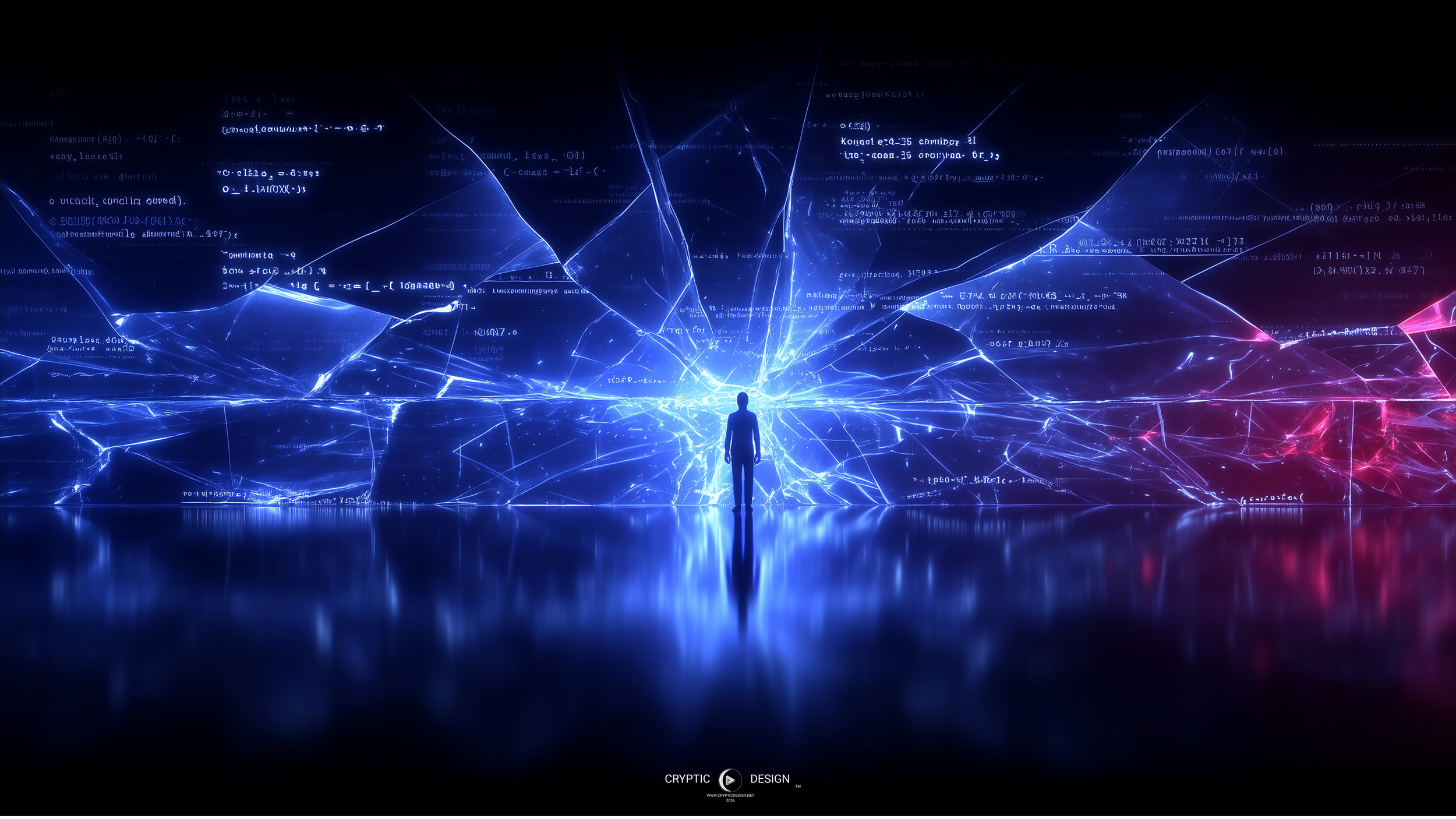
Image Title
Fractured Agency
Image Description
A lone figure facing a cracked field of light and machine code, symbolizing how decision-making can splinter across systems as automation, incentives, and models collide.
Summary
When tools begin to decide, designers decide first. The question is not whether systems will shape behavior—but whether we are willing to acknowledge how.
Back to TopContinue the Conversation
Thoughtful design invites thoughtful discussion.
If this article raised questions or concerns, continue the conversation here:
Back to TopSystem Navigation
Parent: Cryptic Thought Leadership Articles
Related: Being Human in the Age of AI, Design Ethics, Human–Computer Interaction